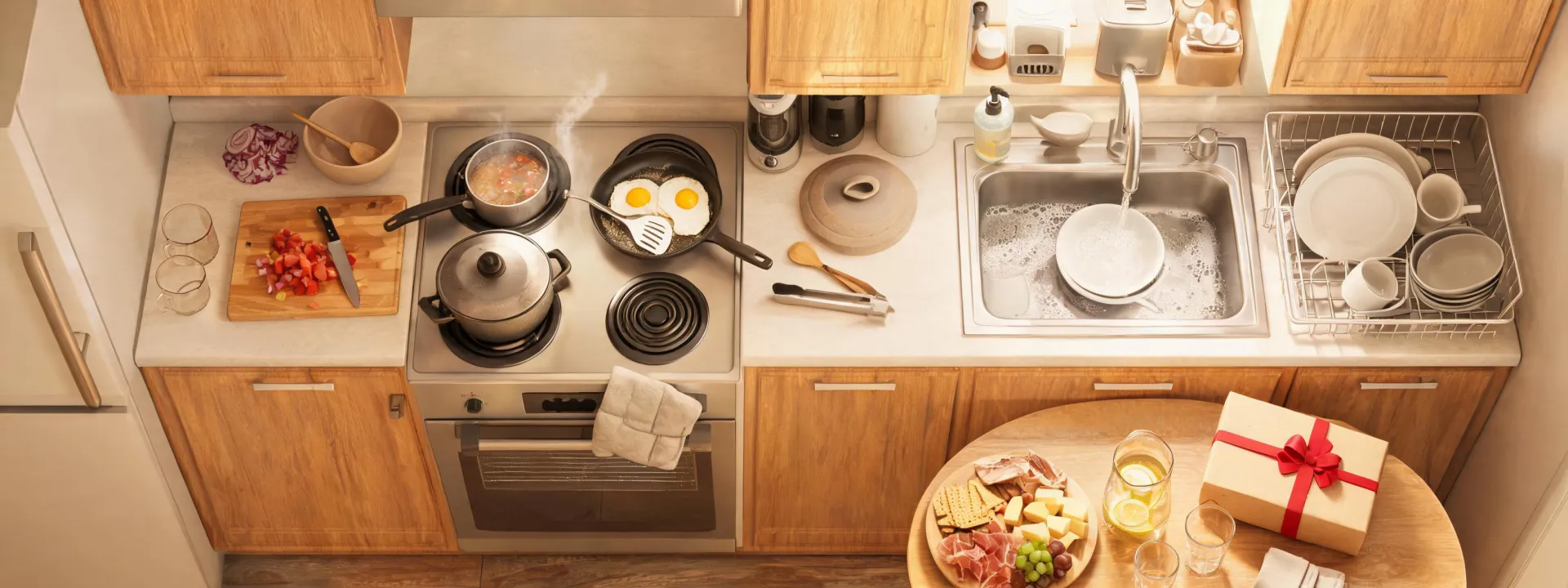
Use-case regions for cookware planning
Instead of treating every shopper the same, T-fal content groups cookware guidance around the setting where the pan will actually be used. That keeps product comparison helpful and prevents feature overload.
Family kitchens
Family kitchens usually need a dependable nonstick skillet, a saucepan that handles grains and sauces, and a larger pan for quick dinners. The main concern is not owning every piece; it is having the few pieces that move through breakfast, leftovers, and weekend cooking without complicated care.
First apartments
New households need simple set logic, compact storage, and clear instructions. T-fal guidance helps them avoid buying a large set before they know their routine, while still covering eggs, pasta, soup, and basic saute work.
Gifting and registries
Gift buyers need confidence that the recipient will use the cookware often. Practical bundles, familiar pan sizes, and care notes make cookware gifts feel thoughtful rather than oversized or hard to maintain.
Small hospitality spaces
Rental hosts and small shared kitchens benefit from cookware that is easy to recognize, simple to clean, and not confusing for short-term guests. The focus is durability, visible care guidance, and replacement planning.